Description:
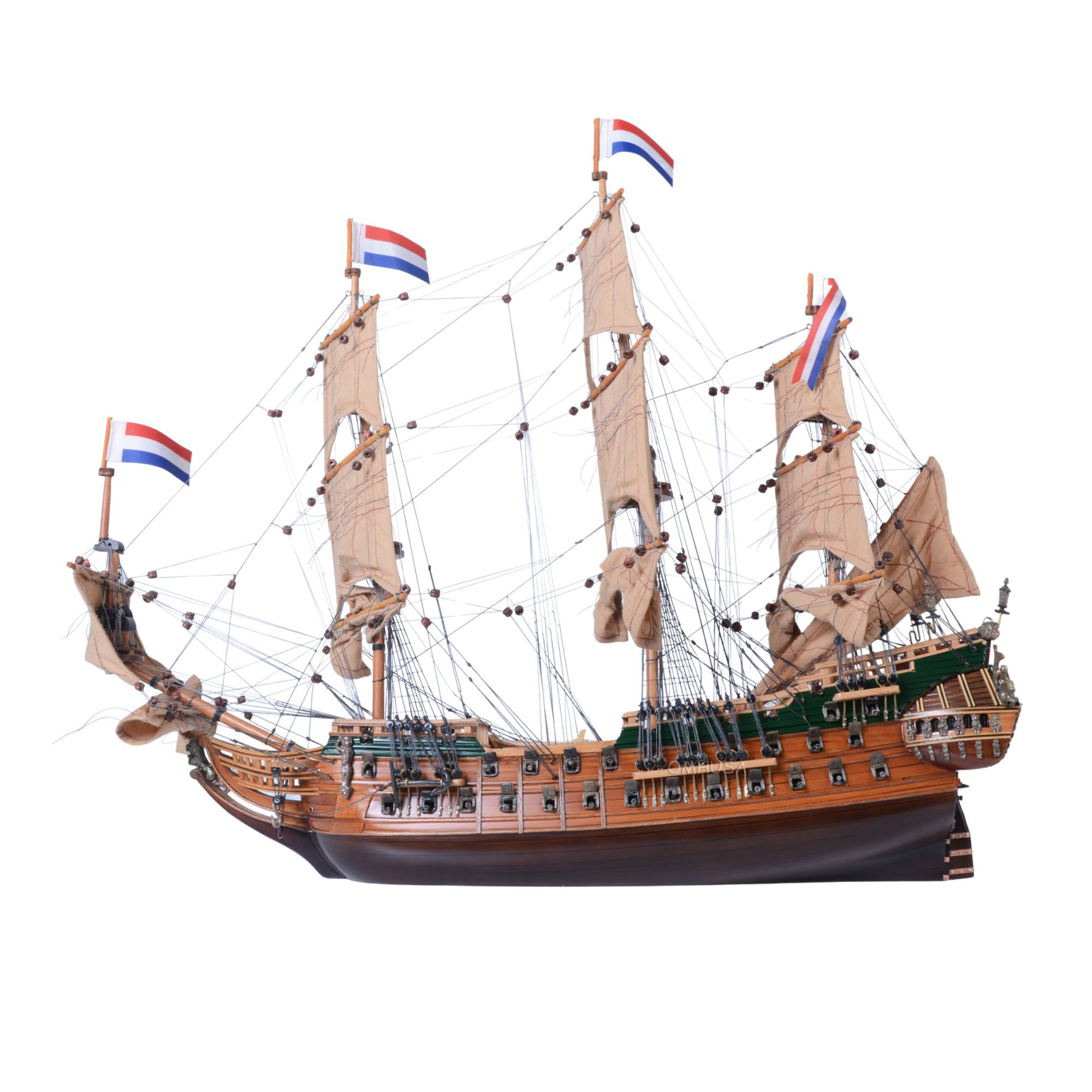
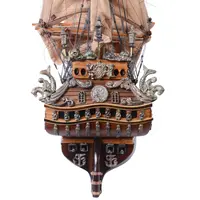
The Friesland ship model is a masterpiece of traditional ship modeling, meticulously handcrafted to capture the grandeur of the 17th-century Dutch warship. Built by master artisans, this model requires hundreds of hours of dedicated craftsmanship to achieve its exceptional level of detail and historical accuracy.
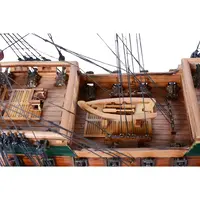
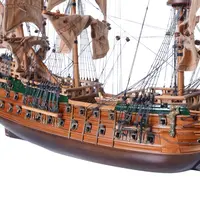
Constructed from premium Western Red Cedar, along with other fine hardwoods, the hull is planked section by section using the traditional plank-on-frame method. This technique not only enhances durability but also replicates the authentic construction of the original vessel. Every curve, joint, and wooden contour is shaped by hand to preserve the natural beauty of the cedar grain.
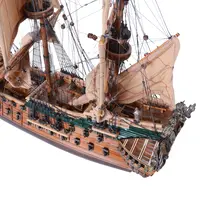
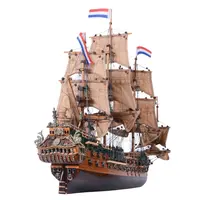
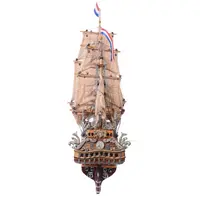
The ship features three towering masts, sophisticated rigging, and hand-stitched canvas sails, all arranged according to historical Dutch naval blueprints. Intricate metal components-such as cannons, anchors, railings, and the ornately sculpted figurehead-are cast from solid metal, carefully polished, and finished to achieve a classic aged look.
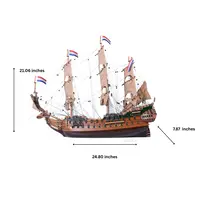
Adorned with Dutch tricolor flags, the model brings to life the elegance and strength of the Friesland model as she once sailed under the Dutch Republic. The entire model rests on a solid wooden display base with a polished metal nameplate, making it a perfect centerpiece for a study, office, or collector's gallery.
History:
The Friesland was a Dutch ship of the line launched in 1663, built for the Admiralty of Friesland during the height of the Dutch Republic’s naval dominance. As an 80-gun warship, she embodied the advanced shipbuilding techniques of the 17th century, featuring a strong hull, balanced rigging, and rich ornamentation typical of Dutch craftsmanship of the Golden Age.
Throughout her service, the Friesland took part in several major maritime conflicts. She is most famously known for sailing under Admiral Michiel de Ruyter during the Third Anglo-Dutch War (1672–1674). The ship fought in the Battle of Solebay (1672), a significant engagement where the Dutch successfully countered a combined English and French fleet, preventing a decisive enemy victory.
Although the Friesland no longer survives, her legacy lives on as a symbol of the Dutch Republic’s naval strength and artistic shipbuilding tradition. Her distinctive profile and elaborate decorative work have made her an enduring favorite among maritime historians, model builders, and collectors around the world.

_20261019_232657.jpg)