Description:
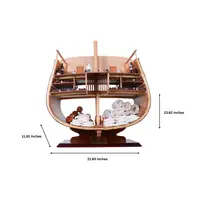
This detailed cross-section model of a Dutch Slave Ship provides an insightful glimpse into the cramped and harrowing conditions endured by enslaved individuals during the transatlantic slave trade. The model is intricately crafted to showcase the ship's internal layout, highlighting both the human cargo and the essential supplies carried on these vessels.
The upper deck features miniature figures of enslaved people, illustrating the inhumane confinement and limited mobility they faced. Below, the lower deck is filled with representations of tightly packed human bodies, stacked in a manner that reflects the grim reality of the journey. Alongside the human cargo, the model also displays barrels and bundles of goods, showcasing the dual function of the ship-transporting enslaved people while also engaging in colonial trade.
Set on a polished wooden base with a brass nameplate, this model offers both a visual and educational representation of the ship's design, shedding light on the dark history of the transatlantic slave trade. It serves as a powerful reminder of the immense human suffering endured aboard these vessels, as well as the historical significance of the Dutch role in this painful chapter of history
History:
The Dutch Slave Ship played a crucial role during the 17th and 18th centuries in the transatlantic slave trade, serving to transport enslaved Africans to the Americas as part of the Dutch colonial empire's extensive trading network.
Designed using advanced shipbuilding techniques of the time, these vessels were built for both strength and efficiency. They were capable of carrying large numbers of enslaved people under deplorable conditions, while also facilitating the transport of goods between Europe, Africa, and the Americas.
While Dutch slave ships stand as symbols of maritime engineering, they also serve as painful reminders of the dark legacy of the transatlantic slave trade. This chapter in history has had a profound and lasting impact on global society and continues to shape ongoing conversations around race and historical justice

_20261019_232631.jpg)